- Superbio AI
- Posts
- Viruses R Us
Viruses R Us
Exploring a Protein-DNA complex responsible for viral reactivation using RoseTTAFold2NA.

Superbio AI
November 05, 2024

Accurate Prediction of the LINE-1 RT Protein-DNA Complex using RoseTTAFold2NA
GWAS studies have shown that most disease-associated mutations lie outside the protein-coding regions of the genome, in repetitive sequences often referred to as "the dark genome." Despite this, the biotech industry has largely focused on targeting protein-coding genes, due to the clearer path to the clinic. So, what are these mysterious genetic elements, and where do they come from?
A major architect of the “dark genome” is the LINE-1 retrotransposon, which is believed to have contributed up to one-third of the human genome (!) over 1-2 billion years of co-evolution with eukaryotes. Its multifunctional enzyme, ORF2p, plays a central role in this process as the instigator of the viral life cycle, the byproducts of which are known to drive the development of diseases such as cancer and autoimmunity. However, due to limited understanding of LINE-1’s structure and mechanisms, it has remained a challenging target to inhibit via therapeutic approaches.
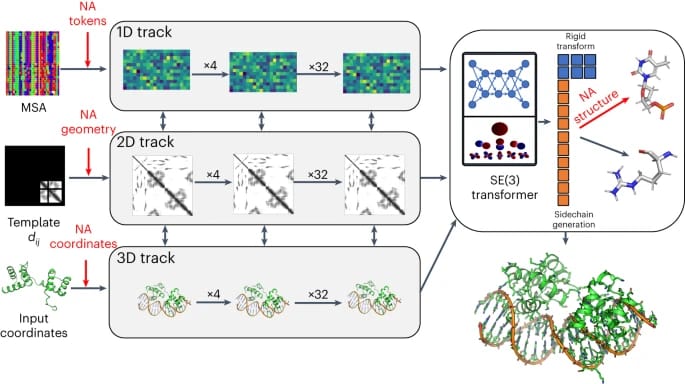
We used RoseTTAFold2NA to investigate the endonuclease structure of ORF2p in complex with its DNA target, finding that our model closely resembled the Protein-DNA complex previously characterized by Cryo-EM. In particular, we observed a mirroring of specific protein-DNA contact points, which could serve as putative targets for therapeutic disruption.
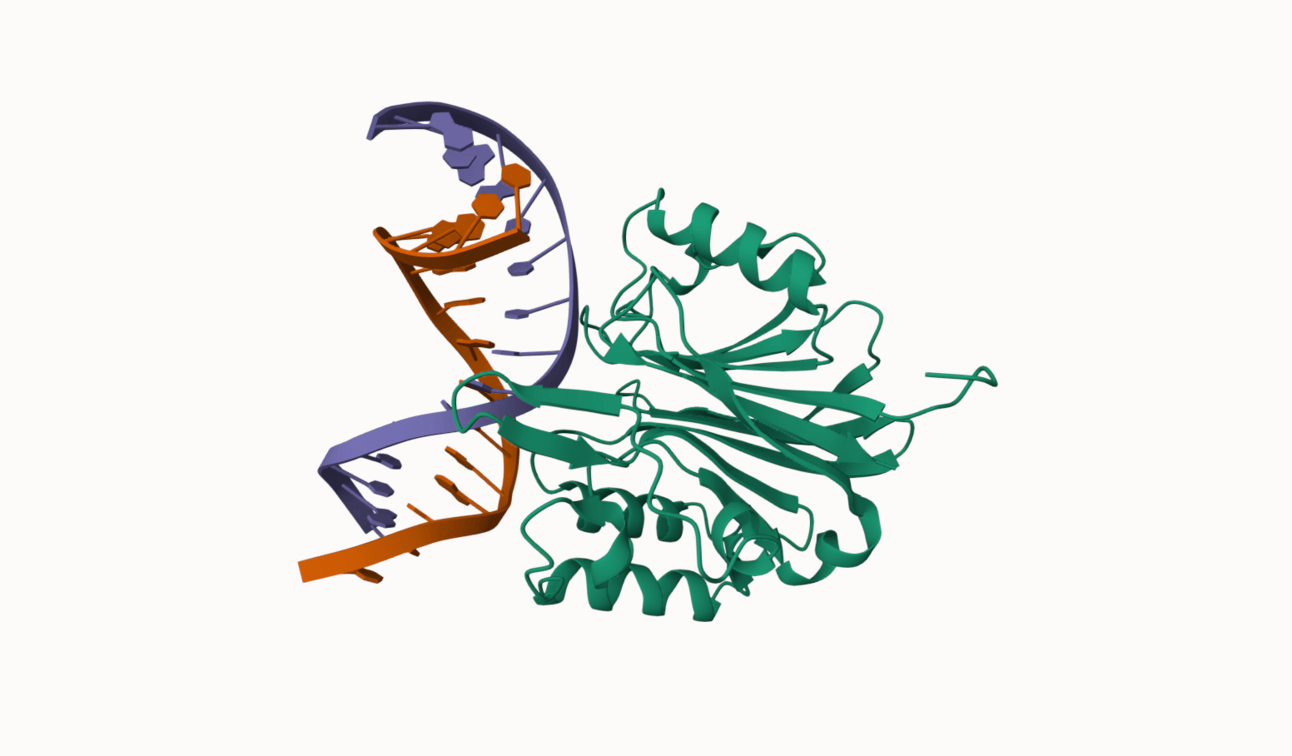
While computational predictions cannot replace experimental validation, we are encouraged by the potential of these in silico tools as starting points for hypothesis generation. Models like RoseTTAFold2NA could open the door to new avenues of inquiry and novel therapeutic strategies, particularly for diseases driven by viral reactivation.
Want to see another tutorial or use case? Let us know by hitting reply →
Until next time 💗,
The Superbio Team